 Best Lovegobuy Spreadsheet
Lovegobuy Spreadsheet
Browsing the Lovegobuy Spreadsheet by category
A Spreadsheet in this corner of the internet is a browsable catalogue of product cards, not a document. It is a shop window for finds, grouped so you can go from category to candidate without knowing a word of Chinese.
Keyword or category. Six fields decide whether what you find can be ordered.
Definition
What a Lovegobuy Spreadsheet is
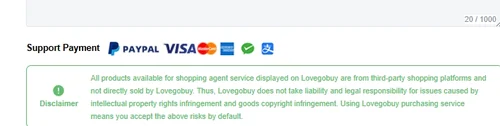
It is a catalogue of product cards kept by shoppers, organised by category, that points at shops on Chinese platforms. Each card is a picture, a title and a link. None of it is operator inventory: the operator's own disclaimer panel states that products shown for its agent service come from third-party platforms and are not sold by the operator directly.
That single sentence explains most beginner surprises. Stock, price and the variant list belong to the shop, and all three can change between the moment a card is written and the moment you submit an order.
Categories
Sixteen category walls
Fifteen of the sixteen entrances below are category paths. Womenswear is a search result rather than a category, because the catalogue is organised by garment type rather than by who wears it; the badge on that card says so.
Each wall is a starting point, not a shortlist. Pick a category, open three or four candidates, and take the one whose shop panel and variant list survive the six-field check.
 Sneakers
 Outerwear
 Hoodies
 T-shirts
 Jeans
Jeans Sweatpants
 Womenswear
 Football shirts
 Bags
Bags Caps
Caps Belts
Belts Eyewear
 Perfume
 Jewellery
 Watches
 Electronics
Search
Searching by name, by link or by photo
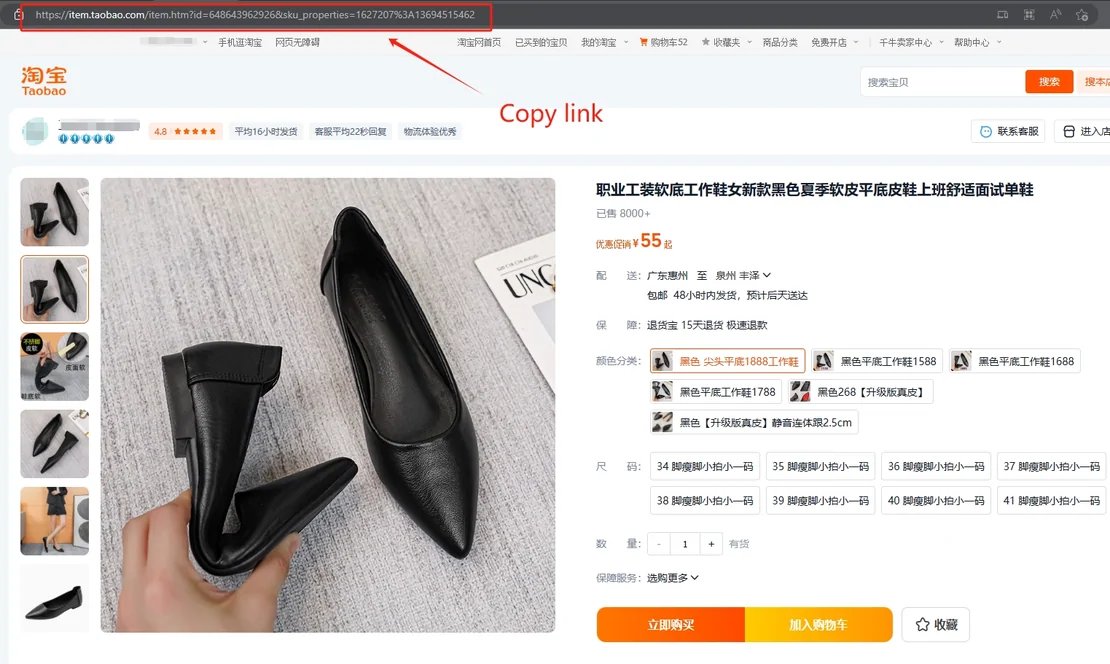
The operator's search box accepts three kinds of input: the official search box accepts a product name, a link or a photo. A pasted shop link is the most precise of the three, because it resolves to one listing on one shop rather than to a keyword match.
Copy the link from the address bar of the shop page, not from a share sheet. Share links often carry tracking parameters that the paste box keeps and the shop ignores.
Maintenance
Why this list is kept the way it is
Three rules govern what appears here. A number is printed only with its source and the date it was read. A claim the operator makes about itself is attributed to the operator and not repeated as fact. Anything the operator does not publish is left blank rather than estimated.
That is why there is no founding year on this site, no catalogue size and no ranking of agents. Those are the three places where finds sites usually invent something.
Judgement
How to choose a Spreadsheet site worth using
Four tests, all of which you can run in under a minute. Open three product cards and see whether the links still resolve; a list nobody maintains rots from the link outward. Look for a date next to the numbers, not just a year in the footer. Check whether prices are quoted in the currency the operator actually charges in, or silently converted at an unstated rate. Then look for the part most sites skip: a sentence saying who runs the site and how it is paid.
Apply the same four to this site. The review dates are printed at the foot of every page, the disclosure is on the about page, and the referral arrangement is stated there in plain words.
Upkeep
Dead links and review dates
Shop listings disappear. When a card stops resolving, the honest options are to replace it or to remove it, not to leave it pointing at nothing. Every page here carries the date its facts were last read, and the maintenance record in the planning folder carries the time-to-live for each one.
Shipping quotes and coupon values have the shortest life of anything on this site. Treat any quote older than a fortnight as a shape, not a price.
Taking a ready find to the agent
When all six fields are set, the next screen is the operator's. Registration asks for an email address, a username and a password.
Facts on this page last read 2026-10-11. Links to the agent carry a referral parameter; see how this site is paid.